
The ANESTHESIA Framework
Navigate any case with confidence.
A complete case management system built from 25 years in the OR — ten waypoints, one reliable framework.
The framework
The GPS metaphor
Every case is a journey.
Your patient is the traveler. Complications are road hazards. The ANESTHESIA framework is your GPS — a turn-by-turn guide from pre-op to induction through maintenance and emergence and eventual PACU or ICU disposition, so you never get lost during the management of your case.
Your patient is the traveler. Complications are road hazards. The ANESTHESIA framework is your GPS — a turn-by-turn guide from pre-op to induction through maintenance and emergence and eventual PACU or ICU disposition, so you never get lost during the management of your case.

Patient → OR → Recovery
Every case is a journey. Every journey needs a map.
The team
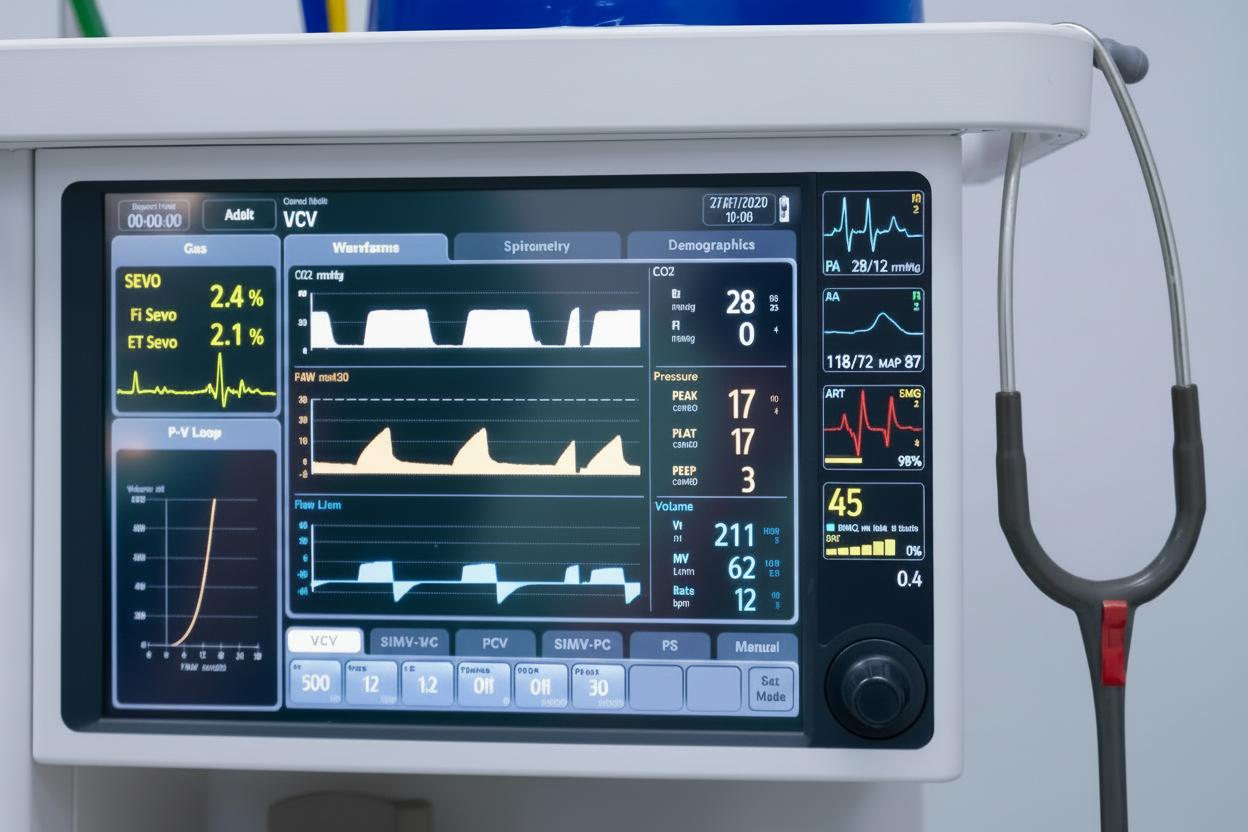
The monitors

The preparation
The framework
A·N·E·S·T·H·E·S·I·A
Ten waypoints. One complete case.
Assess
Patient history, comorbidities, ASA status, and surgical risk stratification.
Needs
Surgical procedure, positioning, monitoring requirements, and IV access.
Evaluate
Labs, imaging, cardiac and pulmonary function, and pre-op optimization.
Strategy
Anesthetic technique, induction plan, maintenance approach, and contingencies.
Threats
Anticipate complications, high-risk moments, and emergency protocols.
Hemodynamics
Blood pressure targets, heart rate management, volume status, and perfusion goals.
Equipment
Airway equipment, IV access, drug preparation, and blood products.
Support
Fluids, analgesia, temperature management, and neuromuscular blockade.
Intraoperative
Continuous monitoring, reassessment, dynamic adjustments, and real-time response.
Aftercare
Emergence, extubation criteria, PACU handoff, and disposition planning.
Who it's for
From first rotation to oral boards — and beyond
Oral Boards Candidates
Use the ANESTHESIA mnemonic as your case presentation backbone — systematic, complete, and examiner-ready.
Residents & Fellows
Build the habit of structured case thinking early. The framework scales from simple to complex cases.
CRNA Students
A practical mental model for case management that bridges classroom knowledge and clinical reality.
Practicing Clinicians
A shared language for case debriefs, teaching, and maintaining systematic thinking under pressure.

The founder
Built by a clinician, for clinicians.
After 25 years managing cases across multiple hospital settings — from community ORs to academic centers — I kept coming back to the same problem: there was no single, systematic framework for thinking through a case from start to finish. The ANESTHESIA mnemonic is the tool I wish I'd had on day one of residency.
After 25 years managing cases across multiple hospital settings — from community ORs to academic centers — I kept coming back to the same problem: there was no single, systematic framework for thinking through a case from start to finish. The ANESTHESIA mnemonic is the tool I wish I'd had on day one of residency.
Ready to navigate with confidence?
Start with the framework. Build the habit. Manage any case.